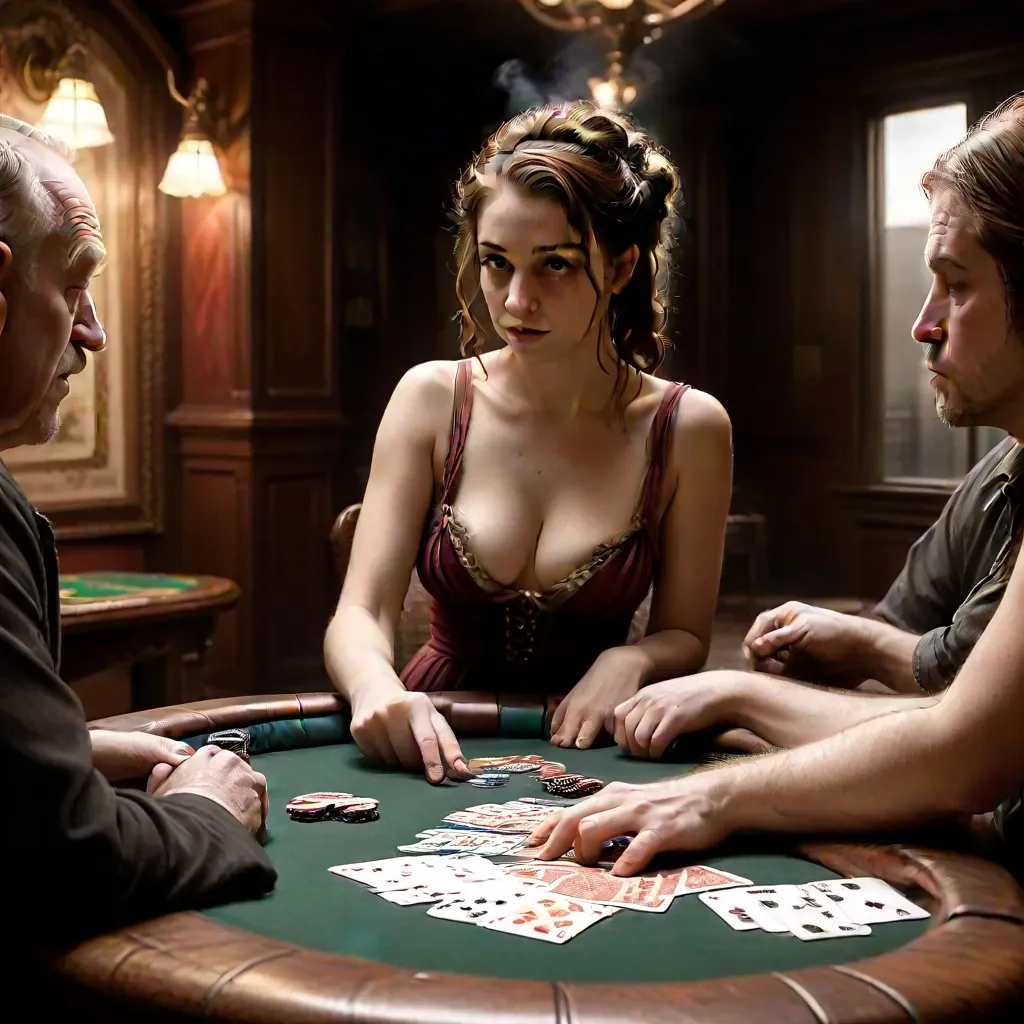
The felt was worn, the air thick with anticipation. With trembling hands, John pushed all his chips forward, declaring, “All in!” His hand? A measly 7-2 offsuit – the worst possible hand in Texas Hold’em. The other player, a seasoned veteran, tanked, agonizing over the decision, his brow furrowed in thought. He held a strong top pair and was almost guaranteed to win at showdown. But under John’s intense gaze and confident demeanor, doubt crept in. Finally, he folded, mucking his cards in frustration. John raked in the pot, a grin spreading across his face, a testament to the effectiveness of a well-timed bluff.
That’s the power of the poker bluff. It’s what transforms a simple card game into a high-stakes battle of wits. Bluffing isn’t just about taking risks; it’s a calculated poker strategy. It’s about turning marginal situations into profitable ones, keeping your opponents guessing. This article explains how to master the art of the bluff, examining fold equity, understanding tells, and choosing the right moments to strike, ensuring no one ever truly knows what you’re holding.
The Psychology of the Fold
At the heart of successful bluffing lies a deep understanding of why players choose to fold. It’s a high-stakes game of psychological warfare, where reading your opponent’s mind is as important as reading the cards. More often than not, a fold isn’t just about the cards; it’s about a complex interplay of fear, risk assessment, and perceived vulnerability. Players fold because they genuinely believe their hand is second-best. They fold because the fear of losing more chips outweighs the potential reward. They fold because they are risk-averse by nature, or are playing a risk-averse strategy.
To truly exploit these tendencies, you must become a student of human behavior. Observe how players react to different bet sizes, board textures, and the overall flow of the game. A player with a tight table image, who suddenly makes a large raise, may be perceived as holding a monster hand, even if they’re bluffing. Conversely, a loose-aggressive player’s bets may be viewed with skepticism. Pot odds also play a significant role. If a player is only risking a small amount to potentially win a large pot, they may be more inclined to call, even with a marginal hand.
Perceived Hand Strength
A player’s decision to fold is heavily influenced by their perception of their own hand’s strength relative to their opponent’s perceived range. In turn, the board texture and betting patterns heavily influence that perception. For example, a “dry” board with no apparent draws (like Ace-High-Deuce rainbow) makes bluffs more believable because there are fewer ways for an opponent to have a strong made hand. The appearance of a “scare card” (a card that completes a common draw, like a fourth heart) can also induce folds, as players become fearful of being outdrawn.
Fear of Loss Aversion
Loss aversion, the psychological tendency to feel the pain of a loss more strongly than the pleasure of an equivalent gain, can significantly impact folding behavior. This is especially true in tournament settings, where survival is paramount. As stack sizes shrink and the bubble approaches, players tend to tighten up, becoming more risk-averse and more willing to fold marginal hands. They are acutely aware that losing their remaining chips means elimination, making them less likely to gamble, and more likely to fold if they believe they are beat.
Identifying Your Opponent Type
A crucial element of successful poker playing revolves around mastering opponent profiling. Do not view your opponent as a faceless entity, but rather as an individual with distinct tendencies. This understanding allows you to tailor your bluffing strategy for maximum effectiveness. Reads aren’t guesswork, they’re about identifying patterns of behavior. Are they splashing around like a fish in the river, folding at any sign of heat, or constantly raising, re-raising and pushing their stack around? Each style dictates a different approach. With the right reads, you will know when to push your chips and when to back off. The effectiveness of your game will be a reflection of your reads on the game, so pay attention. Mastering these reads is the key to turning a good session into a great session.
Calling Stations: The Bluffing Bermuda Triangle
Calling stations are players who call far too often, regardless of the strength of their hand. Bluffing against these players is statistically unsound. They’ll call with anything, wrecking your calculated bluffs with alarming regularity. Avoid bluffing against these opponents at all costs. Instead, focus on value betting. Extract maximum value when you have a strong hand, because a calling station will happily pay you off with their mediocre holdings. For exemple, If you hold the nuts on the river, bet big. They will justify a call with bottom pair. Any time that you are in a hand against a calling station, you are playing for value.
Nits and Rocks: The Easiest Prey
Nits and rocks are extremely tight-passive players. They play very few hands preflop and fold to almost any aggression postflop. These players can be easily identified. For example, look for the player who only enters the pot when they have pocket Aces, and quickly let go of their hand when any heat is applied. Bluffing against these players is highly profitable. Exploit their tight tendencies by betting aggressively when they show weakness. A well-timed bluff in a high-leverage spot will often win you the pot against these risk-averse opponents. Their disciplined plays make them predictable and ripe for exploitation.
Aggressive Players: A Risky but Rewarding Target
Aggressive players constantly bet and raise, applying relentless pressure. While seemingly intimidating, their aggression can be turned against them. You can identify an over-aggressive player by the mountain of chips they have accumulated, or by the speed at which they are burning through buy-ins. Use counter-bluffing strategies to exploit their aggressive tendencies. Recognize spots where they are likely to be bluffing, and re-raise them with a strong hand, or even a well-timed bluff of your own (a light three-bet). Be cautious and disciplined! An aggressive player will notice patterns in your play, so make sure you aren’t easily exploited. The rewards can be substantial.
Spotting the Right Opportunity
Successful bluffing isn’t about randomly pushing chips; it’s a calculated art form. The most crucial element is identifying the prime scenarios where your bluffs will resonate. This involves understanding board conditions, reading opponent tendencies, and maximizing your fold equity – the likelihood of your opponent folding. Master these aspects, and you’re well on your way to turning perceived weakness into profit. Recognize that bluffing is a strategic tool, not a default move. Sometimes, the most powerful play is a well-timed bluff that exploits weaknesses in your opponent’s perception of the game, and carefully selected bluffing spots are key to unlocking that power.
Dry Boards and Weak Ranges
Dry boards, devoid of straight or flush draws, are fertile ground for bluffs. Imagine a flop of Ace-high with two low cards and no flush possibilities. These boards often create a range advantage for the pre-flop aggressor. Players are less likely to have connected strongly with this board. By betting, you represent strength and capitalize on your opponent’s missed opportunities. Dry boards amplify range imbalances making you look more like the real deal, since only a few people will continue with nothing.
The Power of the Scare Card
A scare card can be a game-changer. Picture this: the board shows two hearts, and a third heart appears on the turn. This is a scare card, representing the potential completion of a flush. Even if you don’t have the flush, betting can induce folds. It’s poker psychology at its finest. Exploit the implied odds your opponent incorrectly perceives. The appearance of a scare card can make your bluff narratives far more believable, increasing your fold equity.
Position Is Power
Position is your strategic high ground. Acting last grants you an information advantage. You observe your opponent’s actions before making your own. This allows you to gauge their strength and confidence. Moreover, position allows you to control the size of the pot. Bet aggressively when you want to build the pot or check to keep it small. By using your position wisely, you can craft more effective bluffs ensuring your actions are backed by superior insight and control.
Range Balancing and Storytelling
In the intricate dance of strategic deception, mastering the art of range balancing allows you to transform your bluffs into believable narratives. At its core, range balancing involves ensuring your betting range encompasses a realistic spectrum of hands, effectively mirroring the composition of your value hands. This calculated approach prevents opponents from easily discerning your bluffs, making your overall gameplay more unpredictable and formidable.
Mirroring Value Betting Ranges
Deception in poker is not just about randomly throwing out bets; it’s about carefully curating a betting range that reflects your potential holdings. To effectively mirror your value betting range, analyze the board texture and identify bluffing hands that align with your typical value bets. For instance, if you frequently value bet strong top pairs on a dry board, select bluffing hands that could plausibly develop into strong hands on later streets, such as suited connectors or hands with backdoor flush potential. By choosing bluffs that make sense within the context of your overall strategy, you create a more believable and difficult-to-read image.
Constructing a Credible Bluffing Story
Each bet you make weaves a thread in the narrative of your hand. Your bet sizes, timing, and overall demeanor all contribute to the story you’re telling your opponent. A credible bluffing story requires consistency and attention to detail. If you’ve been playing passively throughout a hand and then suddenly make a large overbet, it might appear suspicious. However, if you’ve been consistently aggressive and your bet size aligns with your previous actions, your bluff becomes more believable. Analyze how different betting patterns are read by other players and use that knowledge to weave a narrative that supports your intended deception.
Utilizing Blockers
Blockers are specific cards in your hand that reduce the likelihood of your opponent holding certain strong value hands. If you’re considering a bluff, holding a blocker can significantly improve your chances of success. For instance, if you’re contemplating a bluff on a board with four to a flush, holding one of the suited cards reduces the probability that your opponent has the nut flush. By carefully considering the potential effects of blockers, you can strategically select bluffing opportunities that are more likely to succeed.
Strategic Bet Sizing for Maximum Fold Equity
Optimizing your bet size is crucial for maximizing fold equity. The goal is to find the sweet spot: large enough to induce folds, but not so large that a call becomes devastating. This involves a delicate balance between risk and reward, and understanding the mathematical relationship between bet size, pot odds, and expected value. Fold equity, the additional equity gained when a bet induces a fold, directly impacts the profitability of bluffs and semi-bluffs.
The Math Behind Fold Equity
Determining the minimum bet size required for a profitable bluff involves considering pot odds. Pot odds represent the ratio of the current pot size to the cost of calling. For a bluff to be profitable, the required fold equity must exceed the risk-reward ratio. For instance, if you’re betting half the pot, your opponent needs to fold more than 33% of the time for the bluff to be profitable. Different situations allow for larger or smaller bet sizes, so it’s important to consider how a bet will affect the pot odds.
Adjusting Bet Size Based on Opponent
Bet size variation depending on the player is very important. Against tight players who are prone to folding, a smaller bet size can often be sufficient to induce a fold, maximizing your profit when they do fold and minimizing your losses when they call. Conversely, against calling stations who rarely fold, larger bet sizes or even value bets become more effective, as they are less likely to be scared off by a smaller bet. Be aware that savvy players will notice repeated patterns, so mixing up bet sizing is crucial in keeping players guessing.

Advanced Bluffing Techniques
Aggression is key to taking your bluffing game to the next level. More advanced strategies like double-barrel, triple-barrel, and check-raise bluffs can add layers of deception to your play, making you a far more unpredictable and challenging opponent. These moves require careful calculation, a keen understanding of your opponent, and a willingness to take calculated risks. Knowing when to use them is crucial to turning a potential loss into a big win.
Double-Barrel
The double-barrel bluff involves following up your initial aggression with a continuation bet on the turn. This is particularly effective when the board texture changes, and a scare card appears that could plausibly improve your hand, or when the turn card doesn’t seem to improve your opponent’s holdings. The goal is to represent strength and pressure your opponent into folding, even if you hold nothing. These bluffs can be some of the most effective in your arsenal, if you can accurately convey you’re getting value!
Triple-Barrel
The triple-barrel bluff is the ultimate river gamble, representing a significant commitment to the pot. By the time you reach the river, the pot has grown considerably, making your opponent’s decision that much more difficult. The psychology at play is that your relentless aggression might indicate you have the nuts, or the best possible hand, even if you don’t! Execute the triple-barrel only when you’re convinced your opponent is unlikely to have a strong holding, and are prepared to go all-in to sell the bluff. This bluff requires a strong read and nerves of steel, turning a potential loss into a substantial win if executed correctly.
Check-Raise
The check-raise is an aggressive move designed to deceive your opponent into thinking you’re weak when you’re actually strong – or representing a strong hand when you actually have nothing! It can be a great opportunity for bluffing. Situations where your opponent is likely to bet, such as on the river, turn, or even the flop, offer prime opportunities to check-raise. This powerful play can quickly shift the momentum of a hand, leading your opponent to overestimate your hand and fold.
Avoiding Common Bluffing Mistakes
Bluffing is an essential part of poker, but it can also be a player’s downfall if not executed correctly. Novice players often fall into common traps that can easily be avoided with a little awareness. Over-bluffing, attempting to bluff into multiple opponents, and failing to accurately read the situation are frequent errors that can quickly deplete a bankroll. A crucial element for a successful bluff is having a proper read on your opponent, recognizing betting patterns, and understanding their tendencies. Without this information, bluffs become high-risk guesses.
The Dangers of Over-Bluffing
The frequency with which a player bluffs is crucial to their overall success. Over-bluffing makes you easily readable. If you’re constantly pushing chips with weak hands, opponents will quickly catch on and start calling you down with even marginal holdings. Proper range balancing is key; this involves mixing in bluffs with your value bets, making it difficult for opponents to discern your hand strength. By varying your play and avoiding predictable patterns, you’ll maintain trust and prevent others from tagging you as an easy bluff target.
The Multi-Way Bluffing Trap
Bluffing in multi-way pots, where multiple opponents are involved, is a significantly riskier proposition than bluffing heads-up. The pot odds might seem enticing, but the chances of someone holding a strong hand increase exponentially with each additional player. Even if your opponents have shown weakness, proceeding with a bluff can be extremely dangerous. The risk-reward ratio is often unfavorable, and the potential for one opponent to call your bluff, while others fold, can lead to a significant loss. Be aware about the implied odds and how people will react when you are betting.
Blindly Leading the Blind
Attempting a bluff with absolutely no information about your opponents or the board texture is akin to blindly leading the blind. While a gut feeling might occasionally be right, relying solely on hunches is a recipe for disaster. There are times when a ‘blind’ bluff might be appropriate, such as when you’re perceived as a tight player and can exploit that image. However, in most situations, it’s better to pull back and wait for a more favorable opportunity. If you have no reads and the board doesn’t favor your perceived range, the bluff is simply too risky.
Conclusion
Bluffing is more than just random guessing; it’s a calculated risk that can significantly impact your poker success. It involves reading your opponents, understanding their tendencies, and exploiting their weaknesses. By mastering the art of the bluff, you gain a powerful tool that can turn the tables, even when your hand isn’t the strongest.
Winning poker requires a combination of skill development, psychological acuity, and strategic thinking. Bluffing is a skill that improves with practice and experience. Don’t expect to become a master bluffer overnight. Start by incorporating these strategies gradually into your game. Observe how your opponents react, refine your approach, and learn from your successes and failures.
With dedication and the right techniques, you can elevate your game and transform yourself into a formidable poker strategist. The felt awaits.