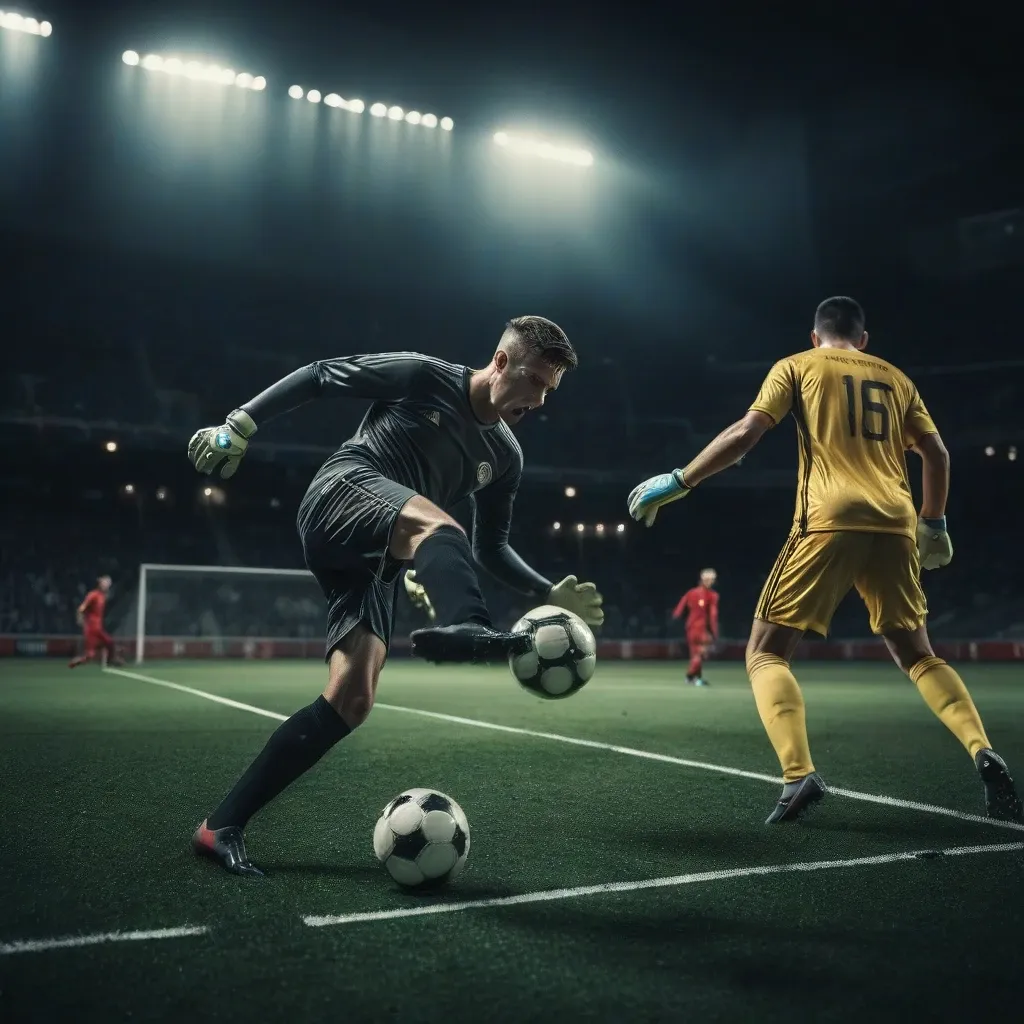
The stadium’s roar fades to a suffocating hush. All eyes focus on the lone figure standing twelve yards from glory or despair. It’s a penalty kick, a moment where dreams are both realized and shattered. I remember the weight of that moment, the intense pressure that seems to amplify every sound and movement. The world shrinks down to the ball, the keeper, and the net.
Soccer penalties are unlike any other play in the sport. They distill the beautiful game down to its rawest essence: a duel between shooter and keeper, a test of nerve as much as skill. This seemingly simple act is a complex interplay of technique, strategy, and, most importantly, the mental game. Succeeding in soccer penalties requires a mastery of multiple elements, each as vital as the last.
The Weight of the Moment: Understanding Penalty Pressure
Penalty pressure is a beast. It’s that feeling when the entire game boils down to one single kick, one shot. And it can make even the most seasoned player crumble. The science behind it is fascinating – and terrifying. Performance psychology tells us that there’s an optimal level of arousal for peak performance, as described by the Yerkes-Dodson Law. Too little, and you’re sluggish. Too much, and you’re a wreck. Penalty kicks crank that arousal dial way past eleven.
Stress hormones surge, clouding focus and hijacking fine motor skills. Suddenly, the simple act of kicking a ball becomes monumentally difficult. It’s like your body is betraying you, turning against the very skills you’ve honed over years. What was muscle memory now feels like a herculean task. I remember one penalty shootout where my legs felt like lead and every thought seemed to amplify the fear of failure. It was a psychological minefield, and I definitely stepped on a few mines.
The Neuroscience of Nerves
When facing penalty pressure, the nervous system goes into overdrive. It’s a cascade of adrenaline and cortisol, spiking heart rate and priming the body for fight or flight. This evolutionary response floods our system, which is great if you’re facing a saber-toothed tiger, not so much when you need to calmly place a ball into the back of the net. Your vision might narrow, your muscles tense, and the fine motor control needed for precise execution can disappear. I once felt my heart pounding so hard before a penalty that it was visible through my jersey and I almost loose my breath. It was impossible to ignore, and almost impossible to kick the ball.
Cognitive Overload: When Thinking Too Much Hurts
Ever heard of paralysis by analysis? It’s the cognitive overload that can strike during a penalty kick. Instead of relying on instinct and trained reflexes, the mind starts to overthink every minute detail. Where should I place the ball? What if the goalie anticipates my move? This mental noise disrupts rhythm and flow, leading to a phenomenon sometimes referred to as “choking.”
I’ve been there, trying to dissect the perfect angle, the ideal amount of power, only to send the ball sailing over the crossbar. It’s a frustrating realization that sometimes, less thought is more. The best penalties are often the ones you don’t think about, the ones where you trust your training and let your body do what it knows how to do.
Technique Under Pressure: Mastering the Fundamentals
A penalty kick boils down to handling extreme pressure. The secret weapon? Rock-solid technique. It is the bedrock upon which success is built. Without it, even the most confident player can crumble under the weight of the moment. Mastering penalty technique isn’t about flashy tricks; it’s about repetition, precision, and understanding the subtle nuances that separate a goal from a miss. Focus on honing your penalty technique; it will unlock consistency and confidence, transforming pressure into opportunity.
Think of it like building a house – a shaky foundation guarantees collapse. In penalties, your technique is the foundation. The more consistent and refined your penalty technique, the better equipped you are to handle the psychological warfare that defines the penalty spot.
Stance and Approach: Building a Solid Foundation
Your penalty kick journey begins with a solid stance and approach. There’s no one-size-fits-all answer. Experiment with different stances – square, angled, slightly open – until you discover what allows you to feel balanced and powerful. Consider the length of your run-up. Too short, and you may lack power; too long, and you risk losing focus. Fine-tune your foot placement, ensuring your non-kicking foot is planted firmly beside the ball, providing stability and directing your energy forward. These small adjustments will make your penalty technique better.
The Sweet Spot: Optimizing Ball Contact
Where your foot meets the ball dictates its trajectory, spin, and ultimately, its destination. Understanding the “sweet spot” is critical. For pure power, connecting with the instep, slightly below the ball’s center, will generate maximum force. A side-foot connection, utilizing the inside of your foot, allows for greater control and placement, ideal for bending the ball around the keeper. Like an artist with a brush, experiment with these different zones, finding what provides you with the most consistent results and the desired effect. Finding what you prefer will level up your penalty technique.
The Art of Deception: Reading the Goalkeeper and Executing the Kick
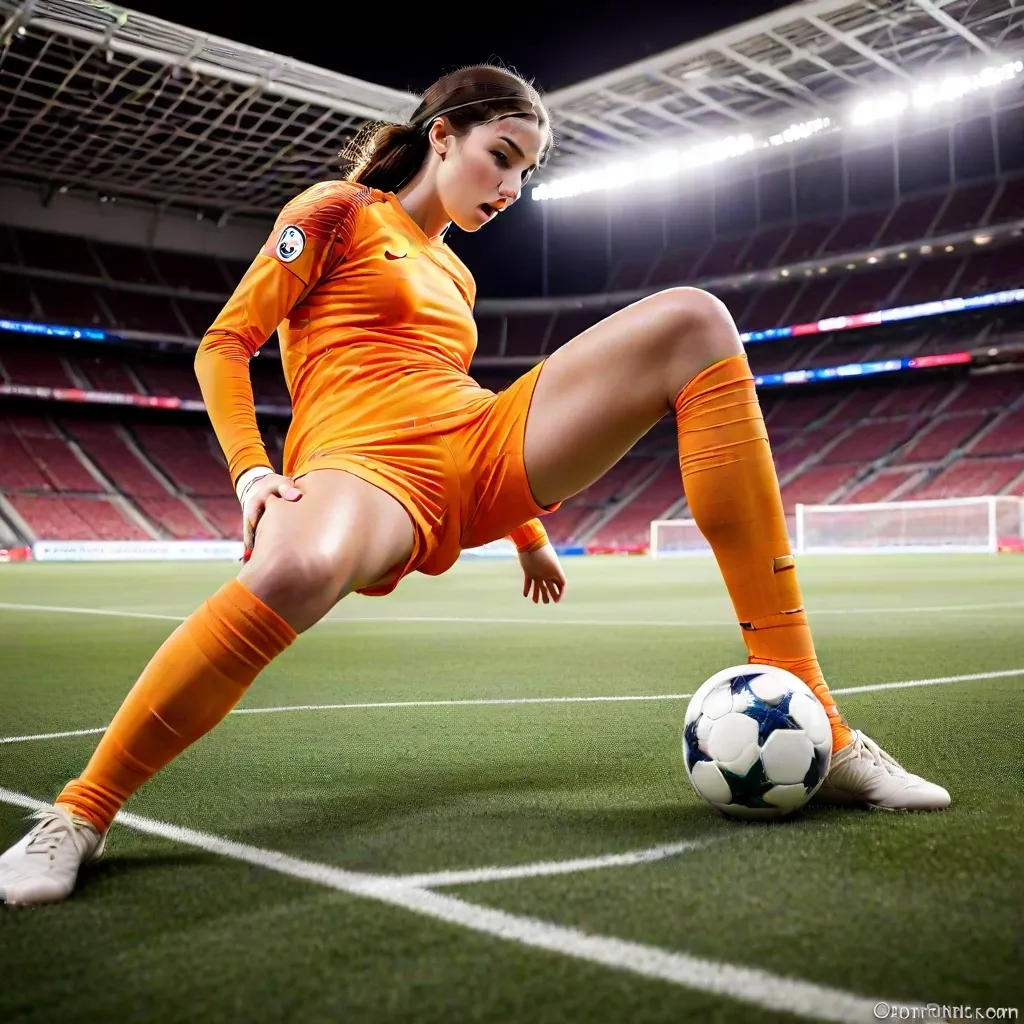
Outsmarting a goalkeeper in a penalty shootout or a free kick situation is a high-stakes game of strategy. It’s not just about power; it’s about deception. Observing the goalkeeper’s movements, stance, and even eye contact offers valuable insights into their likely intentions. This information allows a player to adjust their shot placement at the last moment, dramatically increasing the chances of scoring. Reading the goalkeeper involves more than just reacting to their actions; it’s about anticipating them before they even commit.
Success in these situations is about how well a player can play mind games. The element of surprise is necessary in order to confuse the goalkeeper. Mastering the art of deception is key to success on the field.
Spotting the Tells: Goalkeeper Body Language
Goalkeepers often telegraph their intentions through subtle body language cues. A slight shift in weight, a subtle twitch of the shoulders, or even the direction of their gaze can reveal which way they plan to dive. For instance, if a goalkeeper consistently glances towards their left before a shot, there’s a high probability they’ll dive in that direction. Recognizing these patterns is a subtle but powerful advantage. The most skilled player can use this information to place the ball in the opposite direction, securing a goal.
The Power of the Fake: Executing Decoy Movements
A well-executed fake shot can completely unnerve a goalkeeper. By incorporating decoy movements into a player’s run-up or just before striking the ball, it becomes easier to force the keeper to commit early, opening up the opposite side of the net. A simple body feint, such as pretending to shoot one way and then quickly shifting the angle, can be incredibly effective. The key is to make the fake look convincing, selling the illusion of a genuine shot until the very last moment. Mastering this skill requires practice and a keen understanding of timing.
Beyond Technique: Mental Fortitude and Preparation
Mastering any skill goes beyond just physical technique; it’s about cultivating mental fortitude. The ability to remain calm, focused, and confident under pressure is what separates the good from the great. Mental preparation isn’t just an added bonus; it’s fundamental to consistent high performance. Psychological stability is the bedrock upon which success is built. Through experience, one learns that mental resilience is as crucial as any physical skill. This involves developing strategies to manage stress, maintain focus, and believe in oneself, even when facing adversity. It’s about training the mind to be your greatest ally, not your biggest obstacle.
Visualization: Seeing Success Before It Happens
Visualization involves creating vivid mental images of success before it actually occurs. It’s a powerful tool for building confidence and reducing anxiety. This goes beyond simple positive self-talk; it’s about mentally rehearsing the entire process, feeling the sensations, and experiencing the triumph. To effectively visualize, find a quiet space, close your eyes, and imagine yourself performing flawlessly. Engage all your senses – what do you see, hear, and feel? The more realistic and detailed the visualization, the more impactful it will be in building belief and preparing you for the real thing. Personally, I visualize the entire scenario, from preparation to execution, feeling the emotions of success, ingraining it deeply within my subconscious. Consider it mental practice.
Pre-Shot Routine: Anchoring Your Focus
A pre-shot routine is a sequence of actions consistently performed before each attempt. Think of it as a personal ritual that anchors your focus and promotes calmness. This routine helps to block out distractions, center your thoughts, and prepare you mentally for the task at hand. These rituals can be simple – a deep breath, a specific stance, or a particular phrase repeated silently. The key is consistency; repeating the same routine time after time creates a sense of familiarity and control, even in high-pressure situations. Personally, my pre-shot routine involves taking three deep breaths, focusing on a specific point, and repeating a short mantra to myself. It’s my way of creating a bubble of calm before stepping into the arena.
Iconic Penalties and Lessons Learned
The history of soccer is punctuated by iconic penalty kicks, moments where skill and pressure converge. Analyzing these instances, especially within penalty shootouts, offers invaluable insights into effective strategy and the crucial role of mental fortitude. Some famous successful penalties demonstrate the power of deception and confidence.
For example, a well-executed Panenka, where the kicker gently chips the ball down the middle after the goalkeeper has committed to diving, can be devastatingly effective. This audacious move requires nerves of steel and a clear understanding of the goalkeeper’s tendencies. Recent examples show that while risky, the Panenka can completely demoralize the opposing team.
Missed penalties, on the other hand, often reveal moments of hesitation, overthinking, or succumbing to the intense pressure. Studying these failures highlights the importance of a clear pre-shot routine and unwavering focus. The mindset conveyed by successful penalty takers is typically one of calm determination, while those who falter often display visible signs of anxiety or doubt. By studying these iconic moments in soccer history, aspiring players can refine their own penalty-taking strategy and mental approach.
Training Your Mind and Body: Drills and Exercises
Mastering penalty kicks requires a dual approach: honing technical skills and cultivating mental fortitude. Effective penalty drills should be designed not only to perfect striking technique but also to simulate the intense pressure of a game-deciding moment. Practice exercises, therefore, need to be varied and progressive, starting with basic technique refinement and gradually increasing in complexity and pressure. Mental toughness training is equally vital. Visualization exercises, where players mentally rehearse successful penalty conversions, build confidence and reduce anxiety but will only get you so far. Consistently putting in the work will carry you a lot further.
Pressure Cooker: Simulating Game-Day Stress
To simulate game-day stress, implement pressure drills. One such drill involves setting up a scenario where the player must score a penalty to “win” a simulated match. Increase the stakes by adding consequences for failure, such as extra laps or specific exercises. Introduce distractions – crowd noise, teammates chanting, or even a coach offering verbal challenges. After each kick, ask the player to immediately analyze how they felt, what they focused on, and what they can improve; this promotes self-awareness and stress management under pressure.
Mental Muscle: Strengthening Focus and Resilience
Mental exercises are just as crucial as physical drills. Focus training can be enhanced through mindfulness techniques. A simple yet effective exercise involves focusing on one’s breath for five minutes before practice or a game, noticing the sensation of each inhale and exhale. When thoughts arise, acknowledge them without judgment and gently redirect focus back to the breath. Consistent practice will improve concentration and composure. I recall a time I was so nervous for a kick that I forgot my routine and rushed the kick, causing me to miss. I have been practicing meditation since.
The Future of Penalties: Trends and Innovations
The future of penalty kicks is poised for transformation, driven by evolving strategies, technological advancements, and in-depth research. Emerging penalty trends suggest a shift towards more data-driven approaches in both execution and defense. Goalkeeper analysis is becoming increasingly sophisticated, utilizing advanced metrics to predict shot placement and anticipate shooter behavior.
Data analytics are playing a crucial role, offering insights into optimal shooting techniques, preferred angles, and the psychological aspects of penalty taking. Sports technology, including wearable sensors and motion capture systems, may provide real-time feedback to players, potentially enhancing their accuracy and consistency. Future research is likely to explore the neurological factors influencing performance under pressure, seeking to unlock new strategies for mastering the ultimate test of skill and nerve.
Conclusion
Penalty mastery isn’t some unattainable dream; it’s a skill forged through dedicated practice, a sharp mind, and unwavering mental strength. The insights shared offer a clear path to elevate the penalty kick game. By honing technical skills, understanding goalkeeper psychology, and developing a rock-solid pre-shot routine, the path to success becomes attainable.
Remember, the penalty spot is where pressure meets opportunity. Embrace the challenge, implement these techniques, and transform the penalty kick from a moment of dread into an opportunity to shine. Soccer success is a fusion of mental power, technical skill, and strategic play. Go out there and claim them both!