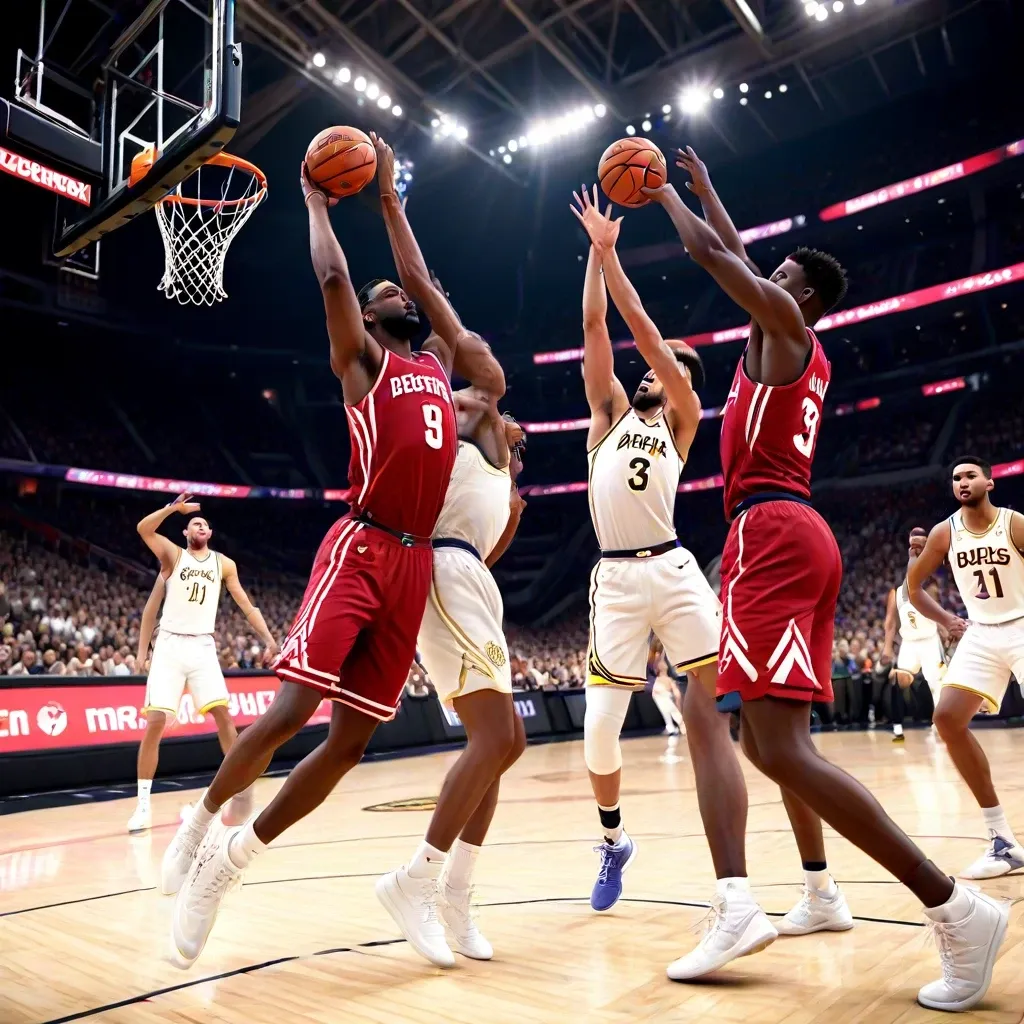
The modern NBA is a whirlwind of breathtaking athleticism and strategic brilliance, but one element reigns supreme: the three-point shot. The game has evolved, and with it, the strategies that govern success, both on the court and in the betting arena. The shift isn’t subtle; offenses are designed to maximize spacing and generate open looks from beyond the arc with a lot of possessions. This high-octane style means one thing for those in the know: opportunity.
Specifically, a deep understanding of how three-point shooting impacts game totals, or “over/unders,” is now an incredibly valuable tool. Once, predicting totals hinged on simple pace and defensive metrics. Now, you need to calculate the arc’s influence. This guide provides actionable insights. You’ll learn how to leverage the three-point revolution for smarter, more profitable NBA betting.
The NBA’s Three-Point Revolution
The three-point shot, once considered a novelty, has sparked a full-blown revolution in the NBA. Its journey from a rarely used gimmick in the early 1980s to a central offensive weapon has fundamentally reshaped the game. Rule changes, such as shortening the distance, played a role, but the true catalyst was the evolving offensive philosophies that began prioritizing floor spacing and perimeter play. Teams like the ’90s Chicago Bulls, with their emphasis on outside shooting to complement dominant inside play, subtly laid the groundwork. However, it was the ’10s Golden State Warriors, with their prolific three-point shooting and dynamic ball movement, that truly unleashed the three-point revolution upon the league.
Quantifying this change reveals its magnitude. Over the decades, the number of three-point attempts and makes has skyrocketed. Teams are no longer content with just a few outside shooters; now, virtually every player on the court needs to be a credible threat from beyond the arc. This tactical shift towards floor spacing has opened up driving lanes and created more opportunities for offensive creativity. And basketball managment understand that.
The Analytics Takeover
The rise of analytics has further fueled the three-point revolution. The concept of “expected value” – weighing the probability of success against the potential reward – has become ingrained in basketball decision-making. Analytics have demonstrated that, the three-point shot, despite being lower percentage than a layup, offers a higher expected point return due to its increased value. This data-driven approach, sometimes referred to as “Moreyball”, has influenced coaching strategies and front-office decisions, leading to an even greater emphasis on the shot from behind the arc.
How Threes Impact Over/Under Totals
The proliferation of the three-point shot has fundamentally reshaped NBA offenses, and its influence extends directly to over/under totals in betting markets. A clear three-point correlation exists: games featuring higher volumes of three-point attempts and makes are statistically more likely to exceed the projected total points. This isn’t merely anecdotal; it’s a quantifiable relationship driven by several factors inherent to the three-point shot itself.
The inherent variance of the three-point shot introduces a degree of unpredictability that can significantly impact scoring. While some regression to the mean is expected, the volatile nature of three-point shooting creates opportunities for explosive scoring runs, pushing game totals higher. Over the past decade, the league average for three-pointers made per game has steadily increased, mirroring a corresponding rise in the average over/under total for NBA games.
Pace and Possessions
NBA pace dictates the tempo of the game, directly influencing the number of possessions each team has. A higher pace translates to more scoring opportunities, naturally leading to higher overall scores. Teams adjust their playing style based on their opponent. For example, a team facing a defensively strong, slow-paced team might try to push the pace to create easier scoring chances in transition. This strategic variation in pace adds another layer of complexity to the over/under equation.

Key Stats and Metrics for Over/Under Betting
To effectively handicap NBA totals, bettors need to analyze key performance indicators that point to a team’s scoring potential. These metrics offer insight into how many points a team is likely to score and concede. Among the most valuable are Offensive and Defensive Ratings. Offensive Rating estimates how many points a team scores per 100 possessions. Defensive Rating estimates how many points a team allows per 100 possessions. By comparing these ratings, one can assess a team’s potential to contribute to a high or low-scoring game.
True Shooting Percentage (TS%) measures a player’s shooting efficiency while taking into account field goals, three-point field goals, and free throws. It offers a more comprehensive view of scoring ability than traditional field goal percentage. Effective Field Goal Percentage (eFG%) adjusts field goal percentage to account for the fact that three-point field goals are worth more than two-point field goals. These shooting metrics provides further insight into a team’s offensive capabilities.
NBA stats, including those mentioned above, are readily available on websites such as NBA.com and Basketball Reference.
Home and Away Splits
When assessing potential totals, it’s crucial to consider home and away splits. Certain teams may exhibit different scoring tendencies depending on whether they are playing at home or on the road. Some players perform better at home. Analyzing these splits can add another layer of refinement to your over/under predictions.
Team-Specific 3-Point Strategies
Understanding an NBA team’s approach to the three-point shot is crucial for predicting game totals. Some teams live and die by the three, structuring their entire offense around creating open looks from beyond the arc. Others use it more sparingly, relying on inside scoring or mid-range jumpers. Examining a team’s offensive philosophy is key. Look at their three-point attempt rate (3PAr) – the percentage of their field goal attempts that are three-pointers. A high 3PAr indicates a team that loves to shoot from deep. Similarly, assessing their three-point percentage (3P%) will tell you how efficiently they convert those opportunities. On the defensive end, you need to evaluate how well a team defends the three-point line. Do they allow a high volume of three-point attempts? Are opponents shooting a high percentage against them? Some teams prioritize protecting the paint, which can leave them vulnerable on the perimeter, and vice versa. Teams like the Golden State Warriors, known for their three-point prowess, and the Houston Rockets, who at one point were almost exclusively a three-point shooting team, demonstrate distinct three-point identities that heavily influence game totals. These high scoring teams are very likely to go over on the point total. When these kind of teams are playing, it shows they can score at a fast pace and put up more points compared to other teams who don’t shoot as well. Analyzing both offensive and defensive three-point tendencies provides valuable insights for predicting whether a game will go over or under the total.
Injuries
Injuries to high scoring NBA players affect the projected total of a game. An elite scorer missing time instantly lowers a team’s offensive ceiling, and therefore, the likelihood of the over.
Back to Backs
Teams playing on consecutive nights often experience fatigue, impacting their pace of play and overall scoring output. Exhaustion typically leads to slower play and affects the total score.
Identifying Market Inefficiencies
To consistently beat the NBA betting markets, identifying and exploiting market inefficiencies is paramount. This involves pinpointing scenarios where the initial betting line underestimates the influence of the three-point shot. Sharp bettors understand that the rate at which teams score three-pointers is not always accurately reflected in the opening odds. By carefully analyzing team compositions, recent performance, and coaching tendencies, individuals can recognize situations where a team is poised to exceed expectations from beyond the arc.
Late-breaking news, such as unexpected injuries or alterations in the starting lineup, can significantly impact the projected total score. Savvy bettors closely monitor these developments and quickly assess their potential effect on three-point shooting. For example, the absence of a key defender might open up more opportunities for opposing shooters, while a change in the offensive lineup could lead to an increased emphasis on three-point attempts.
Line shopping is also very important to obtain the best available number. Different sportsbooks will have very different lines. By comparing across platforms, you can often find a more favorable line, giving you an immediate advantage.
Regression to the Mean
In the NBA, a statistical anomaly often corrected by the principle of regression to the mean. If a team’s three-point shooting percentage is abnormally poor, there is a likelihood that their performance will improve over time, shifting closer to their average as the season progresses. Recognizing this tendency can give you an edge to correctly predict a team’s three points performance in the next game.

Advanced Strategies: Pace, Efficiency, and More
To truly elevate your NBA over/under predictions, delving into advanced analytical techniques is essential. Simply looking at raw scoring averages is insufficient; a deeper understanding of game dynamics is required.
Pace Adjusted Stats: One crucial adjustment involves pace. Teams play at vastly different tempos, impacting scoring opportunities. Pace adjusted stats normalize these differences, allowing for a more accurate comparison. For example, a team averaging 110 points per game while playing at a fast pace might be less impressive than a team averaging 105 points with a slower tempo. The latter may be more efficient at converting possessions into points.
Offensive and Defensive Efficiency: Evaluate offensive and defensive efficiency ratings to determine how well a team scores and prevents scoring per possession. These metrics offer a clearer picture of a team’s true capabilities, regardless of pace.
Situational Factors: Consider situational factors that influence scoring. Rivalry games often lead to heightened intensity and defensive focus. Playoff games, with their increased pressure, can see scoring decrease. Travel schedules and rest advantages also play a significant role. A team playing its third game in four nights on the road will likely underperform compared to a well-rested opponent. Identifying and incorporating these situational variables can provide a significant edge in predicting over/unders.
Bankroll Management and Responsible Betting
Effective bankroll management is the cornerstone of successful NBA totals betting. Before placing any wagers, establish a dedicated betting budget and strictly adhere to it. This involves determining the amount of money you’re comfortable losing without impacting your financial well-being. Implement smart money management by wagering only a small percentage of your bankroll on each game, typically between 1% and 5%. This approach helps to weather losing streaks and preserves capital for future opportunities.
Responsible betting is paramount. Recognize that sports betting should be viewed as entertainment, not a guaranteed source of income. Avoid chasing losses, and never bet more than you can afford to lose. If you feel that your betting habits are becoming problematic, seek help from resources specializing in problem gambling. Remember, maintaining control and recognizing the signs of addiction are crucial for a sustainable and enjoyable betting experience.
Conclusion
Navigating the complexities of NBA betting, especially in the explosive three-point era, requires a keen understanding of evolving offensive strategies and a willingness to adapt. Mastering the over/under involves much more than just looking at the scoreboard; it demands a deep dive into team dynamics, player performance, and pace of play.
This NBA betting summary has armed you with knowledge. Now, the real work begins. Embrace the insights, and test these strategies. Success in NBA betting isn’t just about luck; it’s about informed decisions, disciplined execution and patience! Approach each game with a calculated strategy, and watch your betting results improve over time. You got this!